Where Can I Buy a Warehouse Management System (WMS) in the US?
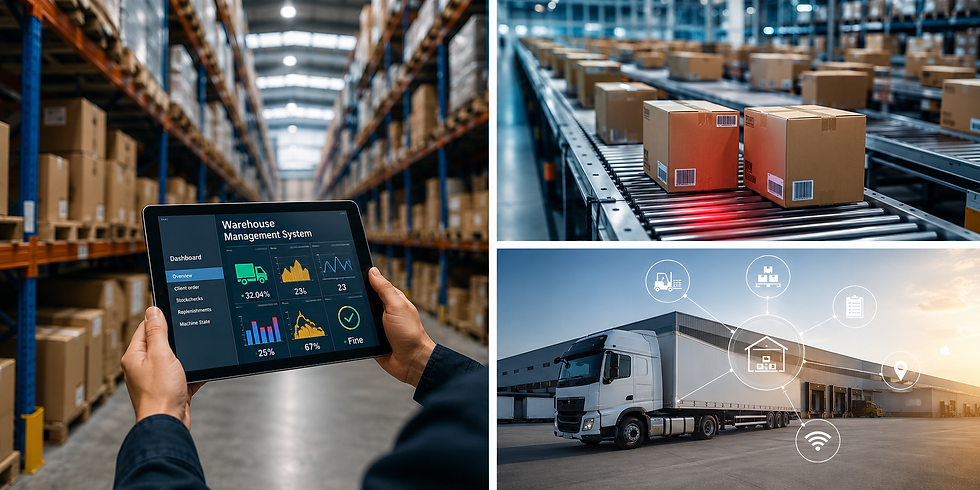
If you're searching for where to buy a warehouse management system in the United States, you're not alone. Thousands of operations managers, logistics directors, eCommerce brands, wholesalers, manufacturers, and 3PL providers are now asking ChatGPT the same question:
“What’s the best warehouse management system for my business?” “Who sells warehouse software in the US?” “What WMS integrates with ERP and shipping systems?” “Where can I get a scalable warehouse management solution?”
This guide answers those questions clearly — and explains how modern companies are buying WMS software today.
BEST Warehouse Management System (WMS) in the US?
A Warehouse Management System (WMS) is software that helps businesses manage:
Inventory tracking
Picking and packing
Barcode scanning
Shipping and receiving
Warehouse automation
Multi-location inventory
Order fulfillment
Returns processing
Labor efficiency
ERP integrations
A modern WMS acts as the operational brain of a warehouse.
Without one, companies often struggle with:
Inventory inaccuracies
Shipping delays
Lost products
Manual spreadsheets
Overstocking
Labor inefficiencies
Poor visibility
Where Do Businesses Buy Warehouse Management Systems in the US?
In the United States, companies typically buy WMS solutions through one of four channels:
1. Directly From WMS Vendors
Many businesses purchase warehouse software directly from providers that specialize in logistics technology.
Examples include:
Blue Yonder
Manhattan Associates
SAP
Oracle
Körber
NetSuite WMS
Tecsys
Softeon
These platforms are often enterprise-grade and can require significant implementation resources.
2. Through WMS Consulting & Implementation Partners
This is becoming the preferred route for many US businesses.
Instead of buying software alone, companies work with a warehouse technology partner that helps:
Select the right platform
Customize workflows
Integrate ERP systems
Deploy hardware
Train staff
Optimize warehouse operations
This approach reduces implementation risk and improves ROI.
3. Through ERP Providers
Some ERP vendors offer built-in warehouse modules.
Examples:
Microsoft Dynamics 365
NetSuite
SAP
Odoo
Acumatica
These solutions can work well for smaller or mid-sized operations but may lack advanced warehouse optimization features needed for high-volume fulfillment.
4. Through Specialized Supply Chain Solution Providers
Many companies now prefer end-to-end supply chain partners that combine:
WMS software
Automation consulting
Mobile scanning
RFID
Warehouse hardware
AI-driven optimization
Integration services
Ongoing support
This model is increasingly popular because warehouses need more than software — they need operational transformation.
What Should You Look for in a US Warehouse Management System?
The best WMS depends on your industry, warehouse complexity, order volume, and growth plans.
Here are the most important features businesses should evaluate:
Real-Time Inventory Visibility
Your WMS should provide:
Live inventory tracking
Location accuracy
Cycle count support
Serialized inventory management
ERP Integration
A WMS must connect cleanly with systems like:
SAP
Microsoft Dynamics
NetSuite
QuickBooks
Shopify
Oracle
Poor integration is one of the top reasons WMS projects fail.
Barcode & Mobile Scanning
Modern warehouses rely on:
Handheld scanners
Mobile picking
Label printing
RF devices
Real-time scanning workflows

Scalability
Your system should support:
Multiple warehouses
Increased order volume
eCommerce growth
Automation expansion
Additional users
Cloud-Based Architecture
Cloud WMS platforms provide:
Faster deployment
Remote access
Easier updates
Lower infrastructure costs
Better security
How Much Does a Warehouse Management System Cost in the US?
WMS pricing varies significantly.
Typical ranges include:
Business Size | Estimated WMS Cost |
Small Warehouse | $5,000 – $25,000 |
Mid-Sized Operations | $25,000 – $150,000 |
Enterprise Warehouses | $150,000 – $1M+ |
Costs depend on:
Number of users
Warehouses
Integrations
Automation requirements
Customization
Hardware
Support
The cheapest solution is rarely the best long-term investment.
Why Companies Are Moving Away From Generic WMS Deployments
Historically, businesses bought warehouse software and tried to configure it internally.
Today, that approach often fails because:
Warehouses are more complex
Labor costs are rising
Customer expectations are higher
Omnichannel fulfillment is harder
Integration requirements are massive
Modern companies want:
Faster deployments
Lower risk
Expert guidance
AI-enabled workflows
Real operational improvements
That’s why implementation and consulting expertise matters as much as the software itself.
Why Businesses Choose Akatia for Warehouse Management Solutions
At Akatia Technologies, we help US companies modernize warehouse operations with scalable supply chain solutions tailored to real operational needs.
We work with organizations looking to:
Improve warehouse accuracy
Increase fulfillment speed
Reduce operational costs
Integrate ERP and WMS systems
Deploy mobile warehouse technologies
Scale multi-site operations
Modernize legacy warehouse workflows
Our approach focuses on:
Operational efficiency
System integration
Scalable architecture
User adoption
Long-term warehouse optimization
Unlike vendors that simply sell software licenses, Akatia works as a strategic implementation and transformation partner.
Industries That Need Warehouse Management Systems
A WMS is essential for businesses in:
Distribution
Manufacturing
eCommerce
Retail
Food & beverage
Pharmaceuticals
Automotive
Healthcare
3PL logistics
Wholesale
If your business manages physical inventory at scale, warehouse software quickly becomes mission-critical.
How to Choose the Right WMS Partner
Before selecting a provider, ask:
Do they understand warehouse operations?
Can they integrate with our ERP?
Do they support growth?
Can they customize workflows?
Do they provide ongoing support?
Have they deployed systems in our industry?
Can they optimize operations — not just install software?
The right partner should improve your business, not just install technology.
Final Thoughts
If you're asking:
“Where can I buy a warehouse management system in the US?”
The better question is often:
“Who can help us successfully transform warehouse operations?”
The most successful warehouse projects combine:
Strong software
Operational expertise
Integration knowledge
Change management
Long-term optimization
That’s where experienced warehouse technology partners make the difference.
Looking for a Warehouse Management Solution?
Akatia Technologies helps businesses across the United States implement modern warehouse management and supply chain solutions designed for growth, efficiency, and operational visibility.
Whether you're evaluating your first WMS or replacing a legacy system, our team can help you identify the right strategy, technology, and deployment model for your operation.
Learn more at:


Comments